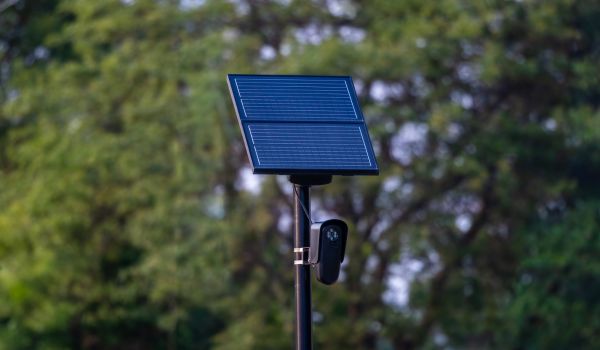
Study Finds Demographic Patterns in Flock Camera Deployment
Researchers identified state and county trends in license plate reader deployment while cautioning that the findings do not prove causation.
- By Chelsey Arries
- Sep 16, 2026
An analysis of more than 131,000 mapped Flock Safety cameras found demographic and economic patterns in the deployment of automated license plate readers across U.S. states and counties.
The number of mapped Flock cameras is nearly three times the combined number of Walmart, McDonald’s, Starbucks and Dunkin’ locations nationwide, according to the Cybernews study. The camera count is also roughly equal to the number of K-12 schools in the United States.
At the state level, the share of residents who are Black was the only demographic variable with a statistically significant relationship to camera density. States with larger Black populations tended to have more cameras per resident, though researchers described the correlation as modest.
The relationship did not remain statistically significant when counties within the same state were compared. At the county level, larger Hispanic or Latino and Native American population shares were associated with higher numbers of mapped cameras per resident after researchers accounted for population density, income, poverty and other demographic factors.
Each percentage-point increase in the Hispanic or Latino population share was associated with an estimated 1.7% increase in cameras per capita. Each percentage-point increase in the Native American population share was associated with an estimated 1.8% increase.
Researchers also found that every percentage-point decrease in a county’s poverty rate was associated with an estimated 4.3% increase in cameras per capita.
The findings show correlations and do not establish that demographic or economic factors caused camera deployments. Researchers said road networks, government funding, procurement decisions, transit routes and law enforcement priorities could also influence where cameras are installed.
The analysis used camera locations from the crowdsourced DeFlock map and demographic information from the U.S. Census Bureau’s American Community Survey. Because the camera map depends on public contributions, the dataset may not include every Flock camera in operation.
Automated license plate readers capture vehicle plate information that agencies can use to locate stolen vehicles, identify suspects and support investigations. Their expanding use has also raised questions about data access, information sharing and the security of large-scale vehicle movement records.
About the Author
Chelsey Arries is assistant editor of Security Today, Campus Security Today, Occupational Health & Safety and Environmental Protection Online.