Flights of Fancy
Digital Pixel System technology used for the evaluation of aerobatic flight training
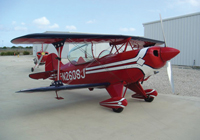
 With aerobatic flight training, the world is upside down. Besides kilter and physical fitness, a safe flight and success at championships requires intensive training.
Peter Müller, a flight instructor in Florida, uses a special technology during training flights. Dallmeier cameras, powered by Pixim's Digital Pixel System® technology, are on board the aircraft recording the entire flight, allowing for a detailed analysis of the flight performance.
Apart from his work as a system integrator for CCTV systems, Müller, owner of Nimbus USA Inc., has been wholly dedicated to aerobatics for many years. He was a member of the National Aerobatic Team of Venezuela, but these days, the experienced pilot and member of the International Aerobatic Club divides his time between his main job and training up-and-coming aerobatic talents in South Florida.
In this sport, national and international competitions are staged, using specifically designed small, high-powered aircrafts to perform standardized flight patterns, according to the Aresti catalog, which gives detailed descriptions of those patterns regarding the angle of attack, distances and curve diameters. Elements of those figures are, for example, the Reverse Cuban Eight, Snap Rolls, Split S, spins, torque rolls and loopings.
Flight Training Using Cameras
During the competition, the exactitude of the performance of those predefined flight patterns is monitored and evaluated by judges on the ground. For the pilot, especially a beginner, it is difficult to assess his or her performance and the precision of a flight pattern. Naturally, though, not every training flight can be monitored by trained staff from the ground.
Instead, video technology can be used for evaluating students' performances. However, the search for suitable cameras proved to be much more difficult than previously expected.
The demands placed on cameras for such applications are extreme. First, the cameras need to be highly robust since the acrobats do not treat their aircraft demurely during the flights. Also, the rapidly changing lighting conditions are among the most extreme requirements imaginable. One minute the sky is above, the next minute it is below. During loopings, the sun may shine from all directions. Sometimes the plane flies around a dark cloud, which causes a shadow and then quickly rises vertically, heading directly into the sun.
Dealing with Lighting Conditions
The Picodome® with Cam_inPIX® technology from Dallmeier, based in Regensburg, Germany, proved to be the best solution. This compact and robust camera outclassed all other tested devices. In contrast to all systems based on CCD chips, the Dallmeier Cam_inPIX technology copes with the extreme lighting conditions, making blooming or smearing a thing of the past. The technology is based on the Digital Pixel System developed by Pixim Inc. In this all-digital technology, each of the hundreds of thousands of pixels in an image performs like an individual self-adjusting camera, able to respond optimally to the unique lighting conditions present at that specific pixel location.
Rapid changes between direct sunlight and lower light sensitivity pose no challenge to the Picodome. For the first time, the accuracy of aerobatic flight patterns can be recorded by on-board cameras without limitations. The live images are used by the flight instructor during the flight in order to more effectively improve the students' flight performances. Back on the ground, the recorded video provides an ideal basis for debriefing the student. As an added benefit, DPS technology yields more highly compressed images that can lower the costs of storing video.
A World-class Solution
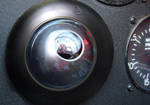
Aboard Müller's most talented student's plane, that of Jojo Rodriguez, four Picodome cameras were installed. Camera 1 was integrated into the student's instrument panel and records his every reaction during each phase of the training. A second camera was mounted above the cockpit, directed at the rear of the aircraft, whereas Camera 3 was installed on the wing of the plane, viewing the cockpit and fuselage from a 90-degree angle. The final Picodome was mounted on the belly of the aircraft and is used to assess the quality of landings.
During a special meeting with former aerobatic world champion Sergie Boriak, Rodriguez and Müller discussed the capabilities of the cameras. Boriak was fascinated by the image quality and its training benefits.
"The recorded videos are definitely an outstanding tool for aerobatic training," Boriak said. "We could never have achieved that kind of image quality, especially with backlight and direct sunlight, with the cameras we have used in aerobatics so far."