Airport to Allow Non-Ticketed Persons to Pass Security

Airport to Allow Non-Ticketed Persons to Pass Security

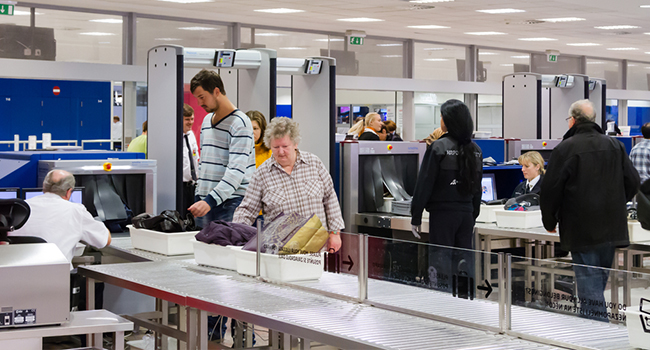
Pittsburgh International has been approved by the Transportation Security Administration to allow non-fliers regular access past its security gate, making the airport the first to do so since security measures increased after 9/11.

Pittsburgh International has been approved by the Transportation Security Administration to allow non-fliers regular access past its security gate, making the airport the first to do so since security measures increased after 9/11.

Starting Sept. 5, non-ticketed customers can pass through security alongside fliers, undergoing the same screening. They will also be required to show ID so they can be vetted against no-fly lists.

“Participants should be prepared to receive the same level of security screening as travelers and should ensure they’re not carrying any prohibited items such as weapons before coming through the security checkpoint,” TSA spokesman Mike England says in a statement. “We look forward to working with the airport on this program.”

Access will initially be allowed only on weekdays between 9 a.m. and 5 p.m. through the new “myPITpass” program, but officials say it could be expanded if it the effort proves popular.

When Pittsburgh International opened its terminals in 1992, the airport was anchored by its impressive Airmall, a collection of stores that was more uncommon at the time. The retail shops proved popular among fliers and non-fliers alike. The airport even touted "street pricing" for Airmall stores, promising customers there wouldn't be a big mark-up just for shopping in the terminal.

The just-announced security change could mean an improvement in sales for the Airmall.

PIT has occasionally offered non-ticketed fliers access to post-security terminal areas during special one-off holiday events which have been a boom for business, according to Ben Zandi, CEO of Fraport USA that operates PIT’s Airmall and airport concessions.

“The sales improve 100%,” Zandi said. “I’m happy to get any increase; we’re optimistic.”

Featured

  • The Evolution of IP Camera Intelligence

    As the 30th anniversary of the IP camera approaches in 2026, it is worth reflecting on how far we have come. The first network camera, launched in 1996, delivered one frame every 17 seconds—not impressive by today’s standards, but groundbreaking at the time. It did something that no analog system could: transmit video over a standard IP network. Read Now

  • From Surveillance to Intelligence

    Years ago, it would have been significantly more expensive to run an analytic like that — requiring a custom-built solution with burdensome infrastructure demands — but modern edge devices have made it accessible to everyone. It also saves time, which is a critical factor if a missing child is involved. Video compression technology has played a critical role as well. Over the years, significant advancements have been made in video coding standards — including H.263, MPEG formats, and H.264—alongside compression optimization technologies developed by IP video manufacturers to improve efficiency without sacrificing quality. The open-source AV1 codec developed by the Alliance for Open Media—a consortium including Google, Netflix, Microsoft, Amazon and others — is already the preferred decoder for cloud-based applications, and is quickly becoming the standard for video compression of all types. Read Now

  • Cost: Reactive vs. Proactive Security

    Security breaches often happen despite the availability of tools to prevent them. To combat this problem, the industry is shifting from reactive correction to proactive protection. This article will examine why so many security leaders have realized they must “lead before the breach” – not after. Read Now

  • Achieving Clear Audio

    In today’s ever-changing world of security and risk management, effective communication via an intercom and door entry communication system is a critical communication tool to keep a facility’s staff, visitors and vendors safe. Read Now

  • Beyond Apps: Access Control for Today’s Residents

    The modern resident lives in an app-saturated world. From banking to grocery delivery, fitness tracking to ridesharing, nearly every service demands another download. But when it comes to accessing the place you live, most people do not want to clutter their phone with yet another app, especially if its only purpose is to open a door. Read Now

New Products

  • HD2055 Modular Barricade

    Delta Scientific’s electric HD2055 modular shallow foundation barricade is tested to ASTM M50/P1 with negative penetration from the vehicle upon impact. With a shallow foundation of only 24 inches, the HD2055 can be installed without worrying about buried power lines and other below grade obstructions. The modular make-up of the barrier also allows you to cover wider roadways by adding additional modules to the system. The HD2055 boasts an Emergency Fast Operation of 1.5 seconds giving the guard ample time to deploy under a high threat situation.

  • Camden CV-7600 High Security Card Readers

    Camden CV-7600 High Security Card Readers

    Camden Door Controls has relaunched its CV-7600 card readers in response to growing market demand for a more secure alternative to standard proximity credentials that can be easily cloned. CV-7600 readers support MIFARE DESFire EV1 & EV2 encryption technology credentials, making them virtually clone-proof and highly secure.

  • AC Nio

    AC Nio

    Aiphone, a leading international manufacturer of intercom, access control, and emergency communication products, has introduced the AC Nio, its access control management software, an important addition to its new line of access control solutions.