China Reportedly Used Microchips to Infiltrate U.S. Companies

China Reportedly Used Microchips to Infiltrate U.S. Companies

The claims have been strongly disputed by the technology companies.

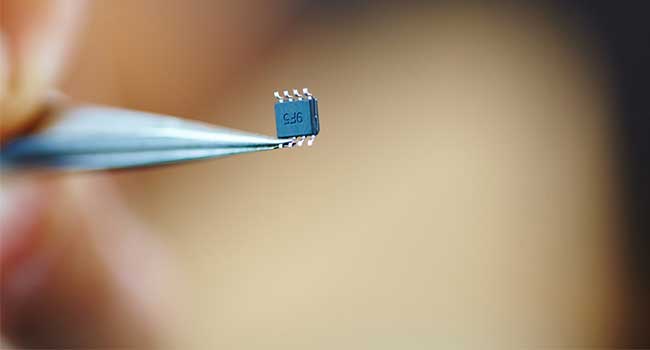
Data center equipment run by tech giants, such as Amazon Web Services and Apple, may have bee infiltrated by the Chinese government by a tiny microchip inserted during the equipment manufacturing process, according to a stunning Bloomberg BusinessWeek report. The companies named in the report have strongly denied the claims. 

BusinessWeek  explains that the chips had been the subject of a secret U.S. government investigation since 2015 and were used for gathering intellectual property and trade secrets from American companies. The chips may have been introduced by a Chinese server company called Super Micro that assembles machines used in the centers. 

BusinessWeek reports that the problem was discovered in 2015 and confirmed by independent security investigators hired by the cloud providers. Super Micro servers were removed by Apple that year, according to the report, which also says that ties between Apple and Super Micro were severed the following year. A follow-up investigation involving several government agencies followed. 

Apple, AWS and Super Micro have all vehemently disputed the report by BusinessWeek, which heavy relies on anonymous government and corporate sources. Apple said it did not find the chips and Super Micro denied having introduced the chips during manufacturing. 

"We are deeply disappointed that in their dealings with us, Bloomberg's reporters have not been open about the possibility that they or their sources might be wrong or misinformed. Our best guess is that they are confusing their story with a previously reported incident in 2016 which we discovered an infected driver on a single Super Micro server in one of our labs," Apple said in a statement to CNBC. "That one-time event was determined to be accidental and not a targeted attack against Apple."

Intellectual property theft is one of the core arguments for touch trade restrictions on China by the Trump administration. China has been long suspected in spy campaigns based on hardware made there. 

In a statement to Security Today, Head of Hardware Security at F-Secure Andrea Barisani says he's skeptical of the report.

"It is certainly possible to mount supply chain attacks that can affect the security of COTS (Commercial Off The Shelf) hardware, albeit posing notable implementation difficulties," Barisani said. "If anything, there are only official denials on the story and the lack of technical details doesn't really favor the conclusions from a technical standpoint."

Moving forward, CEO of Fortanix Ambui Kumar says U.S. companies need to carefully vet their supply chain.

"Unfortunately, foreign countries manufacture most of our chips and systems, so it’s going to be tricky to protect against motivated nation-state actors," Kumar said in a statement to Security Today. "However, there is at least one component that is designed and integrity-controlled in USA, the CPU. Most of the new CPUs offer secure enclaves that keep applications and data protected even when such hardware implants are present. Enclaves are new but proven ways to protect sensitive data. If we cannot keep hardware implants away, may the best thing is to ensure security even when they are present."

About the Author

Sydny Shepard is the Executive Editor of Campus Security & Life Safety.

Featured

  • The Future of Access Control: Cloud-Based Solutions for Safer Workplaces

    Access controls have revolutionized the way we protect our people, assets and operations. Gone are the days of cumbersome keychains and the security liabilities they introduced, but it’s a mistake to think that their evolution has reached its peak. Read Now

  • A Look at AI

    Large language models (LLMs) have taken the world by storm. Within months of OpenAI launching its AI chatbot, ChatGPT, it amassed more than 100 million users, making it the fastest-growing consumer application in history. Read Now

  • First, Do No Harm: Responsibly Applying Artificial Intelligence

    It was 2022 when early LLMs (Large Language Models) brought the term “AI” into mainstream public consciousness and since then, we’ve seen security corporations and integrators attempt to develop their solutions and sales pitches around the biggest tech boom of the 21st century. However, not all “artificial intelligence” is equally suitable for security applications, and it’s essential for end users to remain vigilant in understanding how their solutions are utilizing AI. Read Now

  • Improve Incident Response With Intelligent Cloud Video Surveillance

    Video surveillance is a vital part of business security, helping institutions protect against everyday threats for increased employee, customer, and student safety. However, many outdated surveillance solutions lack the ability to offer immediate insights into critical incidents. This slows down investigations and limits how effectively teams can respond to situations, creating greater risks for the organization. Read Now

  • Security Today Announces 2025 CyberSecured Award Winners

    Security Today is pleased to announce the 2025 CyberSecured Awards winners. Sixteen companies are being recognized this year for their network products and other cybersecurity initiatives that secure our world today. Read Now

New Products

  • ResponderLink

    ResponderLink

    Shooter Detection Systems (SDS), an Alarm.com company and a global leader in gunshot detection solutions, has introduced ResponderLink, a groundbreaking new 911 notification service for gunshot events. ResponderLink completes the circle from detection to 911 notification to first responder awareness, giving law enforcement enhanced situational intelligence they urgently need to save lives. Integrating SDS’s proven gunshot detection system with Noonlight’s SendPolice platform, ResponderLink is the first solution to automatically deliver real-time gunshot detection data to 911 call centers and first responders. When shots are detected, the 911 dispatching center, also known as the Public Safety Answering Point or PSAP, is contacted based on the gunfire location, enabling faster initiation of life-saving emergency protocols.

  • PE80 Series

    PE80 Series by SARGENT / ED4000/PED5000 Series by Corbin Russwin

    ASSA ABLOY, a global leader in access solutions, has announced the launch of two next generation exit devices from long-standing leaders in the premium exit device market: the PE80 Series by SARGENT and the PED4000/PED5000 Series by Corbin Russwin. These new exit devices boast industry-first features that are specifically designed to provide enhanced safety, security and convenience, setting new standards for exit solutions. The SARGENT PE80 and Corbin Russwin PED4000/PED5000 Series exit devices are engineered to meet the ever-evolving needs of modern buildings. Featuring the high strength, security and durability that ASSA ABLOY is known for, the new exit devices deliver several innovative, industry-first features in addition to elegant design finishes for every opening.

  • A8V MIND

    A8V MIND

    Hexagon’s Geosystems presents a portable version of its Accur8vision detection system. A rugged all-in-one solution, the A8V MIND (Mobile Intrusion Detection) is designed to provide flexible protection of critical outdoor infrastructure and objects. Hexagon’s Accur8vision is a volumetric detection system that employs LiDAR technology to safeguard entire areas. Whenever it detects movement in a specified zone, it automatically differentiates a threat from a nonthreat, and immediately notifies security staff if necessary. Person detection is carried out within a radius of 80 meters from this device. Connected remotely via a portable computer device, it enables remote surveillance and does not depend on security staff patrolling the area.