Texas Health Network Deploys AI Gun Detection and Intelligent Situational Awareness Platform

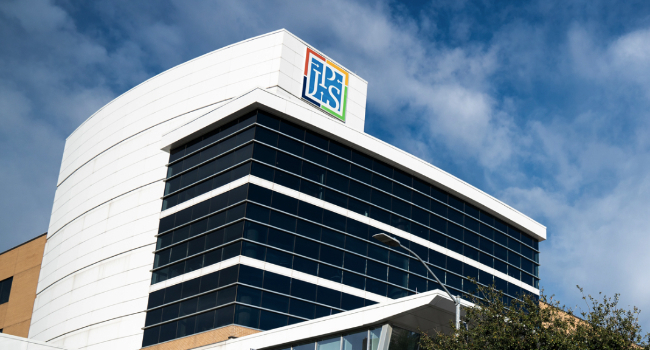
ZeroEyes, the creators of the only AI-based gun detection video analytics platform that holds the US Department of Homeland Security SAFETY Act Designation, today announced that its proactive gun detection and intelligent situational awareness solution has been deployed at JPS Health Network in Fort Worth, Texas to mitigate gun-related violence.

Located in Tarrant County, the 582-bed hospital includes an acute care facility, outpatient care centers, and psychiatric emergency room. Its Level I Trauma Center receives over 125,000 emergency department visits annually from local and air EMS agencies, as well as others outside the county.

"At the hospital, we witness first-hand the impact of gun violence, which is why we strive to safeguard our patients, staff, and visitors," said Randell Hayen, Chief of the Tarrant County Hospital District Police Department. "Along with our onsite police department, adding ZeroEyes gives us another tool to use to do just that."

ZeroEyes' HIPAA-compliant AI gun detection and intelligent situational awareness software is now layered onto existing digital security cameras at JPS Health Network. If a gun is identified, images are instantly shared with the ZeroEyes Operations Center (ZOC), staffed 24/7/365 by specially trained U.S. military and law enforcement veterans. If these experts determine that the threat is valid, they dispatch alerts and actionable intelligence — including visual description, gun type, and last known location — to the on-site hospital police department as quickly as 3 to 5 seconds from detection.

The ZeroEyes Research Center has found that nearly 50% of gun violence incidents at healthcare facilities take place within the building - among these incidents, 42% are targeted attacks, while 39% are spontaneous. Although hospitals are entrusted with caring for the victims of gun-related violence, this surge in violent incidents within healthcare facilities has prompted approximately 40 states to enact or strengthen laws regarding violence against healthcare workers.

"Hospitals are inherently fast-paced environments where people are already vulnerable, and the size of the JPS facility makes the job of its police force and security teams even more challenging," said Mike Lahiff, CEO, and co-founder of ZeroEyes. "I personally believe that the hospital's deployment of ZeroEyes underscores its unwavering commitment to staying ahead of the curve in safety and security while providing exceptional care for its community."

Featured

  • Security Today Announces 2025 CyberSecured Award Winners

    Security Today is pleased to announce the 2025 CyberSecured Awards winners. Sixteen companies are being recognized this year for their network products and other cybersecurity initiatives that secure our world today. Read Now

  • Empowering and Securing a Mobile Workforce

    What happens when technology lets you work anywhere – but exposes you to security threats everywhere? This is the reality of modern work. No longer tethered to desks, work happens everywhere – in the office, from home, on the road, and in countless locations in between. Read Now

  • TSA Introduces New $45 Fee Option for Travelers Without REAL ID Starting February 1

    The Transportation Security Administration (TSA) announced today that it will refer all passengers who do not present an acceptable form of ID and still want to fly an option to pay a $45 fee to use a modernized alternative identity verification system, TSA Confirm.ID, to establish identity at security checkpoints beginning on February 1, 2026. Read Now

  • The Evolution of IP Camera Intelligence

    As the 30th anniversary of the IP camera approaches in 2026, it is worth reflecting on how far we have come. The first network camera, launched in 1996, delivered one frame every 17 seconds—not impressive by today’s standards, but groundbreaking at the time. It did something that no analog system could: transmit video over a standard IP network. Read Now

  • From Surveillance to Intelligence

    Years ago, it would have been significantly more expensive to run an analytic like that — requiring a custom-built solution with burdensome infrastructure demands — but modern edge devices have made it accessible to everyone. It also saves time, which is a critical factor if a missing child is involved. Video compression technology has played a critical role as well. Over the years, significant advancements have been made in video coding standards — including H.263, MPEG formats, and H.264—alongside compression optimization technologies developed by IP video manufacturers to improve efficiency without sacrificing quality. The open-source AV1 codec developed by the Alliance for Open Media—a consortium including Google, Netflix, Microsoft, Amazon and others — is already the preferred decoder for cloud-based applications, and is quickly becoming the standard for video compression of all types. Read Now

New Products

  • Camden CV-7600 High Security Card Readers

    Camden CV-7600 High Security Card Readers

    Camden Door Controls has relaunched its CV-7600 card readers in response to growing market demand for a more secure alternative to standard proximity credentials that can be easily cloned. CV-7600 readers support MIFARE DESFire EV1 & EV2 encryption technology credentials, making them virtually clone-proof and highly secure.

  • Unified VMS

    AxxonSoft introduces version 2.0 of the Axxon One VMS. The new release features integrations with various physical security systems, making Axxon One a unified VMS. Other enhancements include new AI video analytics and intelligent search functions, hardened cybersecurity, usability and performance improvements, and expanded cloud capabilities

  • AC Nio

    AC Nio

    Aiphone, a leading international manufacturer of intercom, access control, and emergency communication products, has introduced the AC Nio, its access control management software, an important addition to its new line of access control solutions.