
Ports of Antwerp and Zeebrugge Upgrading Biometrics to Lumidigm Fingerprint Readers

Ports of Antwerp and Zeebrugge Upgrading Biometrics to Lumidigm Fingerprint Readers
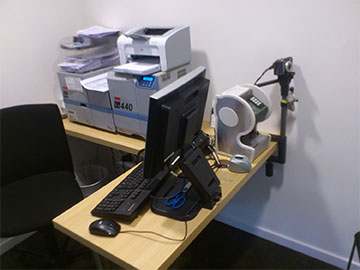
Ports of Antwerp and Zeebrugge Upgrading Biometrics to Lumidigm Fingerprint ReadersLumidigm today announced that Alfapass, the provider of the security smart card system at the Ports of Antwerp and Zeebrugge in Belgium, is replacing the older biometric system at the ports’ registration stations with Lumidigm V-Series multispectral imaging fingerprint readers. The Port of Antwerp is Europe’s second largest port, while Zeebrugge is the central port for Europe's automotive industry and has the largest, liquefied, natural gas terminal complex in Europe. Alfapass is now in the process of enrolling 17,000 truck drivers and 10,000 longshoremen at the two ports on the new system.

A major access control function at the port facilities is the unique identification of individuals in a more efficient manner, especially for those who travel between multiple port facilities. The solution is a single ID card that covers all facilities rather than a different entrance card for each company at the port. Therefore, visitors to both Belgian ports carry a smart card from Alfapass that includes the visitor’s biometric template. When reading the card, each individual facility has the option of also verifying the fingerprint stored on the card. By checking and verifying the fingerprint, facility personnel can assure that the card is being presented by its rightful owner.

“We have been using biometrics since 2005, but we needed a better solution to provide increased security that is easier for port visitors to use,” explained Piet Hadermann, Alfapass operations manager. “Our former technology could not differentiate one person from another at the level of certainty and security we require. The false acceptance rate was much too high. Plus, some people, especially infrequent visitors, would forget how to use it from visit to visit. With the Lumidigm units, visitors intuitively put their fingers on the illuminated blue light, even when using self-service units.”

All port visitors are now being enrolled – from longshoremen to ship’s chaplains – with the Lumidigm fingerprint readers. The biometric readers are placed and used at port registration offices and administrative kiosks located at the “gate in” for truck drivers, and elsewhere, an Alfapass card can be used. Alfapass enrolls user cards with two fingerprints, assuring that if there is a problem with the primary finger, the user can simply sign in with the alternate finger. The kiosk or access control device can also ask for the second finger.

Using the Alfapass system when a card is lost or stolen, or the person no longer works for the company, the card is automatically blocked at all participating facilities. No longer can the ex-employee or person who stole or found the card get into the ports. Only card holders that also pass the biometric check-in are able to enter. Fraud is virtually impossible.

Featured

  • Empowering and Securing a Mobile Workforce

    What happens when technology lets you work anywhere – but exposes you to security threats everywhere? This is the reality of modern work. No longer tethered to desks, work happens everywhere – in the office, from home, on the road, and in countless locations in between. Read Now

  • TSA Introduces New $45 Fee Option for Travelers Without REAL ID Starting February 1

    The Transportation Security Administration (TSA) announced today that it will refer all passengers who do not present an acceptable form of ID and still want to fly an option to pay a $45 fee to use a modernized alternative identity verification system, TSA Confirm.ID, to establish identity at security checkpoints beginning on February 1, 2026. Read Now

  • The Evolution of IP Camera Intelligence

    As the 30th anniversary of the IP camera approaches in 2026, it is worth reflecting on how far we have come. The first network camera, launched in 1996, delivered one frame every 17 seconds—not impressive by today’s standards, but groundbreaking at the time. It did something that no analog system could: transmit video over a standard IP network. Read Now

  • From Surveillance to Intelligence

    Years ago, it would have been significantly more expensive to run an analytic like that — requiring a custom-built solution with burdensome infrastructure demands — but modern edge devices have made it accessible to everyone. It also saves time, which is a critical factor if a missing child is involved. Video compression technology has played a critical role as well. Over the years, significant advancements have been made in video coding standards — including H.263, MPEG formats, and H.264—alongside compression optimization technologies developed by IP video manufacturers to improve efficiency without sacrificing quality. The open-source AV1 codec developed by the Alliance for Open Media—a consortium including Google, Netflix, Microsoft, Amazon and others — is already the preferred decoder for cloud-based applications, and is quickly becoming the standard for video compression of all types. Read Now

  • Cost: Reactive vs. Proactive Security

    Security breaches often happen despite the availability of tools to prevent them. To combat this problem, the industry is shifting from reactive correction to proactive protection. This article will examine why so many security leaders have realized they must “lead before the breach” – not after. Read Now

New Products

  • Compact IP Video Intercom

    Viking’s X-205 Series of intercoms provide HD IP video and two-way voice communication - all wrapped up in an attractive compact chassis.

  • Unified VMS

    AxxonSoft introduces version 2.0 of the Axxon One VMS. The new release features integrations with various physical security systems, making Axxon One a unified VMS. Other enhancements include new AI video analytics and intelligent search functions, hardened cybersecurity, usability and performance improvements, and expanded cloud capabilities

  • PE80 Series

    PE80 Series by SARGENT / ED4000/PED5000 Series by Corbin Russwin

    ASSA ABLOY, a global leader in access solutions, has announced the launch of two next generation exit devices from long-standing leaders in the premium exit device market: the PE80 Series by SARGENT and the PED4000/PED5000 Series by Corbin Russwin. These new exit devices boast industry-first features that are specifically designed to provide enhanced safety, security and convenience, setting new standards for exit solutions. The SARGENT PE80 and Corbin Russwin PED4000/PED5000 Series exit devices are engineered to meet the ever-evolving needs of modern buildings. Featuring the high strength, security and durability that ASSA ABLOY is known for, the new exit devices deliver several innovative, industry-first features in addition to elegant design finishes for every opening.