Security Increased in France Ahead of Presidential Elections

Security Increased in France Ahead of Presidential Election

There are many things to worry about when it comes to a presidential election; security is number one on that list. For France, the threats of the election have begun to show themselves.

Just a few days before citizens go to the polls, French authorities arrested two men on suspicion of planning an “imminent” attack ahead of the first round of the presidential election on Sunday.

French intelligence agents say the two men were French nationals and were known to authorities for having been radicalized.  They believe the two were ready to commit an attack on French soil “in the coming days” as they found weapons, explosives, six cell phones and an ISIS flag in an apartment rented by the suspects.

Authorities have warned the presidential candidates that an unnamed candidate’s campaign headquarters was the target of the attack. As a result, the security details for those in the running have been increased.

“We were warned Thursday that two individuals were preparing an attack on the headquarters of a major candidate. We were asked to strengthen the security of our headquarters and to limit travel by public transport. The police patrols were reinforced around the building,” a source close to centrist candidate Emmanuel Macron told local news.

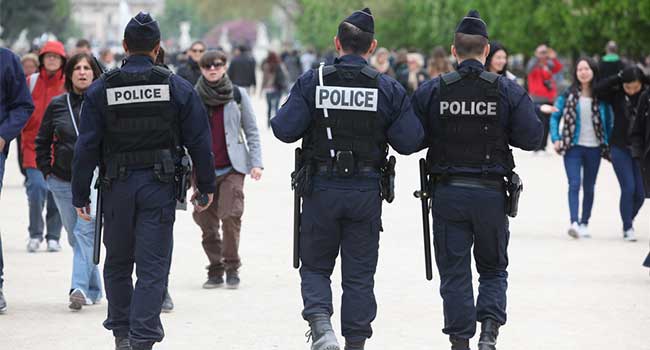
French voters will go to the polls on Sunday, with the second round of voting scheduled for May 7. More than 50,000 soldiers and police will be deployed for both rounds of voting.  The country has been in a state of high alert since the terrorist attacks in 2015.

“Everything has been put in place to ensure the security of this big event for our democracy and our republic,” French Interior Minister Matthias Fekl said. “The security forces are mobilized everywhere across France to ensure the security of French people and to ensure the presidential campaign goes smoothly.”

Featured

  • Empowering and Securing a Mobile Workforce

    What happens when technology lets you work anywhere – but exposes you to security threats everywhere? This is the reality of modern work. No longer tethered to desks, work happens everywhere – in the office, from home, on the road, and in countless locations in between. Read Now

  • TSA Introduces New $45 Fee Option for Travelers Without REAL ID Starting February 1

    The Transportation Security Administration (TSA) announced today that it will refer all passengers who do not present an acceptable form of ID and still want to fly an option to pay a $45 fee to use a modernized alternative identity verification system, TSA Confirm.ID, to establish identity at security checkpoints beginning on February 1, 2026. Read Now

  • The Evolution of IP Camera Intelligence

    As the 30th anniversary of the IP camera approaches in 2026, it is worth reflecting on how far we have come. The first network camera, launched in 1996, delivered one frame every 17 seconds—not impressive by today’s standards, but groundbreaking at the time. It did something that no analog system could: transmit video over a standard IP network. Read Now

  • From Surveillance to Intelligence

    Years ago, it would have been significantly more expensive to run an analytic like that — requiring a custom-built solution with burdensome infrastructure demands — but modern edge devices have made it accessible to everyone. It also saves time, which is a critical factor if a missing child is involved. Video compression technology has played a critical role as well. Over the years, significant advancements have been made in video coding standards — including H.263, MPEG formats, and H.264—alongside compression optimization technologies developed by IP video manufacturers to improve efficiency without sacrificing quality. The open-source AV1 codec developed by the Alliance for Open Media—a consortium including Google, Netflix, Microsoft, Amazon and others — is already the preferred decoder for cloud-based applications, and is quickly becoming the standard for video compression of all types. Read Now

  • Cost: Reactive vs. Proactive Security

    Security breaches often happen despite the availability of tools to prevent them. To combat this problem, the industry is shifting from reactive correction to proactive protection. This article will examine why so many security leaders have realized they must “lead before the breach” – not after. Read Now

New Products

  • Camden CV-7600 High Security Card Readers

    Camden CV-7600 High Security Card Readers

    Camden Door Controls has relaunched its CV-7600 card readers in response to growing market demand for a more secure alternative to standard proximity credentials that can be easily cloned. CV-7600 readers support MIFARE DESFire EV1 & EV2 encryption technology credentials, making them virtually clone-proof and highly secure.

  • AC Nio

    AC Nio

    Aiphone, a leading international manufacturer of intercom, access control, and emergency communication products, has introduced the AC Nio, its access control management software, an important addition to its new line of access control solutions.

  • Connect ONE’s powerful cloud-hosted management platform provides the means to tailor lockdowns and emergency mass notifications throughout a facility – while simultaneously alerting occupants to hazards or next steps, like evacuation.

    Connect ONE®

    Connect ONE’s powerful cloud-hosted management platform provides the means to tailor lockdowns and emergency mass notifications throughout a facility – while simultaneously alerting occupants to hazards or next steps, like evacuation.