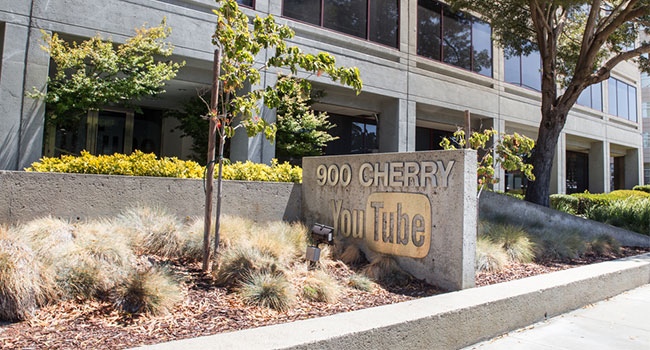
Active Shooter Incident at YouTube HQ Leaves Four Injured

Active Shooter Incident at YouTube HQ Leaves Four Injured

Three people were shot at the YouTube HQ in San Bruno, Calif.

Employee's of Google-owned YouTube are reeling after an active shooter incident on the San Bruno campus Tuesday that left four people injured and a suspected shooter dead.

Police told reporters that they received multiple calls to 911 of gunfire in the area of the YouTube Headquarters around 12:48 p.m. and immediately responded to the area. San Bruno authorities say a person unknown to the company walked onto the campus and began shooting nearby people with a handgun.

Three people were injured with gunshot wounds and a fourth sustained an ankle injury in the panic of a hurried evacuation. The gunshot victims were taken to area hospitals and are listed in serious or critical condition.

Upon entry into the YouTube HQ campus, police found the suspected shooter dead from a self-inflicted gunshot wound.

Police identified the deceased shooter as Nasime Aghdam, a 39-year-old woman from San Diego, and said there is no evidence she knew the victims or that they were specifically targeted. Family of Aghdam said she had been missing for several days leading up to the shooting.

Authorities responded within minutes to the YouTube Headquarters and were joined by San Francisco FBI agents and the ATF. The investigation is on-going as police search to confirm a potential motive for the shooting, but reporters have unearthed several YouTube channels belonging to a person of the same name as the suspected shooter. Videos on the channel suggest the creator was frustrated by the demonetization of her videos.


About the Author

Sydny Shepard is the Executive Editor of Campus Security & Life Safety.

Featured

New Products

  • Luma x20

    Luma x20

    Snap One has announced its popular Luma x20 family of surveillance products now offers even greater security and privacy for home and business owners across the globe by giving them full control over integrators’ system access to view live and recorded video. According to Snap One Product Manager Derek Webb, the new “customer handoff” feature provides enhanced user control after initial installation, allowing the owners to have total privacy while also making it easy to reinstate integrator access when maintenance or assistance is required. This new feature is now available to all Luma x20 users globally. “The Luma x20 family of surveillance solutions provides excellent image and audio capture, and with the new customer handoff feature, it now offers absolute privacy for camera feeds and recordings,” Webb said. “With notifications and integrator access controlled through the powerful OvrC remote system management platform, it’s easy for integrators to give their clients full control of their footage and then to get temporary access from the client for any troubleshooting needs.”

  • HD2055 Modular Barricade

    Delta Scientific’s electric HD2055 modular shallow foundation barricade is tested to ASTM M50/P1 with negative penetration from the vehicle upon impact. With a shallow foundation of only 24 inches, the HD2055 can be installed without worrying about buried power lines and other below grade obstructions. The modular make-up of the barrier also allows you to cover wider roadways by adding additional modules to the system. The HD2055 boasts an Emergency Fast Operation of 1.5 seconds giving the guard ample time to deploy under a high threat situation.

  • ResponderLink

    ResponderLink

    Shooter Detection Systems (SDS), an Alarm.com company and a global leader in gunshot detection solutions, has introduced ResponderLink, a groundbreaking new 911 notification service for gunshot events. ResponderLink completes the circle from detection to 911 notification to first responder awareness, giving law enforcement enhanced situational intelligence they urgently need to save lives. Integrating SDS’s proven gunshot detection system with Noonlight’s SendPolice platform, ResponderLink is the first solution to automatically deliver real-time gunshot detection data to 911 call centers and first responders. When shots are detected, the 911 dispatching center, also known as the Public Safety Answering Point or PSAP, is contacted based on the gunfire location, enabling faster initiation of life-saving emergency protocols.