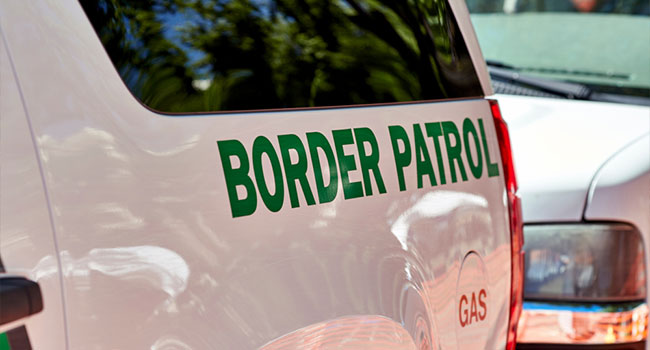
border patrol car

Border Patrol May Give Body Cameras To Agents at Certain Checkpoints

Customs and Border Protection is asking vendors to describe their ability to provide body cameras, video management, facial recognition technology and more.

Border agents may be given body cameras capable of recording their interactions with the public, according to a recent request for information (RFI) issued by the U.S. Customs and Border Protection agency. 

The agency is asking vendors to describe their capabilities in bringing together three components to support an incident-driven video recording system (IDVRS): body worn cameras, software for video management and redaction, and cloud storage management. Vendors have until Oct. 31 to respond to the request. 

In the RFI, CBP said it envisions a targeted deployment of body cameras at checkpoints set up on the border between ports of entry. These checkpoints typically have limited video recording and IT infrastructure in place, NextGov reported.

“CBP is considering a targeted deployment of IDVRS to select known interdiction points where fixed camera systems do not record agent interactions with the public,” the agency wrote. “CBP will prioritize locations based on operational need.”

Some of the agency’s requirements include cameras that can be turned on and off manually with a 30-second buffer period to capture events that happened prior to the agent turning a camera on, according to NextGov. Recording devices should be able to capture and store video for 12 hours at a time. 

In addition, the agency is requiring vendors to allow authorized users to redact identifiable information within the system. That system must have the ability to track user activity in order to prevent abuse of the alteration capability. 

Most footage collected through the program would be stored in CBP-owned data servers, but the agency is also interested in cloud storage for video that requires long-term retention, which CBP classifies as longer than two years. Agency users would also require a cloud storage platform for files that are frequently accessed, according to the RFI memo. 

CBP also requests that vendors describe their facial recognition capabilities. The agency runs a facial recognition program at airports and other entry points into the U.S. and may expand into body cameras if this initiative goes forward, according to the memo. 

About the Author

Haley Samsel is an Associate Content Editor for the Infrastructure Solutions Group at 1105 Media.

Featured

  • Improve Incident Response With Intelligent Cloud Video Surveillance

    Video surveillance is a vital part of business security, helping institutions protect against everyday threats for increased employee, customer, and student safety. However, many outdated surveillance solutions lack the ability to offer immediate insights into critical incidents. This slows down investigations and limits how effectively teams can respond to situations, creating greater risks for the organization. Read Now

  • Security Today Announces 2025 CyberSecured Award Winners

    Security Today is pleased to announce the 2025 CyberSecured Awards winners. Sixteen companies are being recognized this year for their network products and other cybersecurity initiatives that secure our world today. Read Now

  • Empowering and Securing a Mobile Workforce

    What happens when technology lets you work anywhere – but exposes you to security threats everywhere? This is the reality of modern work. No longer tethered to desks, work happens everywhere – in the office, from home, on the road, and in countless locations in between. Read Now

  • TSA Introduces New $45 Fee Option for Travelers Without REAL ID Starting February 1

    The Transportation Security Administration (TSA) announced today that it will refer all passengers who do not present an acceptable form of ID and still want to fly an option to pay a $45 fee to use a modernized alternative identity verification system, TSA Confirm.ID, to establish identity at security checkpoints beginning on February 1, 2026. Read Now

  • The Evolution of IP Camera Intelligence

    As the 30th anniversary of the IP camera approaches in 2026, it is worth reflecting on how far we have come. The first network camera, launched in 1996, delivered one frame every 17 seconds—not impressive by today’s standards, but groundbreaking at the time. It did something that no analog system could: transmit video over a standard IP network. Read Now

New Products

  • Mobile Safe Shield

    Mobile Safe Shield

    SafeWood Designs, Inc., a manufacturer of patented bullet resistant products, is excited to announce the launch of the Mobile Safe Shield. The Mobile Safe Shield is a moveable bullet resistant shield that provides protection in the event of an assailant and supplies cover in the event of an active shooter. With a heavy-duty steel frame, quality castor wheels, and bullet resistant core, the Mobile Safe Shield is a perfect addition to any guard station, security desks, courthouses, police stations, schools, office spaces and more. The Mobile Safe Shield is incredibly customizable. Bullet resistant materials are available in UL 752 Levels 1 through 8 and include glass, white board, tack board, veneer, and plastic laminate. Flexibility in bullet resistant materials allows for the Mobile Safe Shield to blend more with current interior décor for a seamless design aesthetic. Optional custom paint colors are also available for the steel frame.

  • FEP GameChanger

    FEP GameChanger

    Paige Datacom Solutions Introduces Important and Innovative Cabling Products GameChanger Cable, a proven and patented solution that significantly exceeds the reach of traditional category cable will now have a FEP/FEP construction.

  • A8V MIND

    A8V MIND

    Hexagon’s Geosystems presents a portable version of its Accur8vision detection system. A rugged all-in-one solution, the A8V MIND (Mobile Intrusion Detection) is designed to provide flexible protection of critical outdoor infrastructure and objects. Hexagon’s Accur8vision is a volumetric detection system that employs LiDAR technology to safeguard entire areas. Whenever it detects movement in a specified zone, it automatically differentiates a threat from a nonthreat, and immediately notifies security staff if necessary. Person detection is carried out within a radius of 80 meters from this device. Connected remotely via a portable computer device, it enables remote surveillance and does not depend on security staff patrolling the area.