How AI is Closing the Loop Between What Cameras See and What They Learn
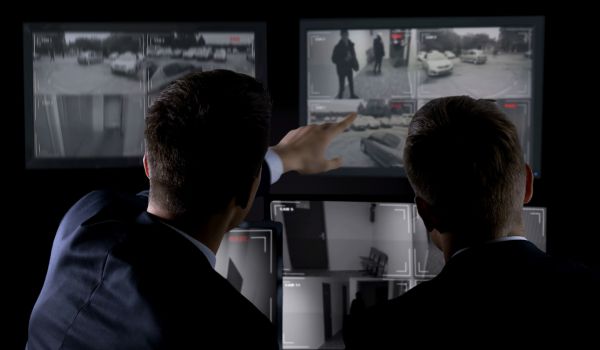
Dual-tasking remote security guards during off-peak hours creates a continuous feedback loop that replaces stock dataset training with real-world surveillance context.
- By Rick Bentley
- Jul 28, 2026
Most conversations about AI in surveillance focus on detection — what the system can find right now. The more interesting story is how these systems not just stay up to date but learn and grow.
What happens after the detection? When real-world data flows back into the training model, the system gets smarter with every event it meets fewer false positives AND fewer false negatives, better calibration to the specific environment it's watching.
Let’s explore how the feedback loops between live monitoring data and AI training are quietly transforming video surveillance from a static tool into one that compounds in value the longer it is deployed — and what that means for how operators should be evaluating AI surveillance platforms.
Today’s video surveillance AI systems need to discern everything from person detection to face recognition, from vehicle detection to license plate reading, from a crowd of people to a single human in a shooting stance, and much more.
An even bigger problem is that most AI wasn’t made for video surveillance data. Most AI object detectors are trained off what one might call “Clip Art.”
And that is what most AI object detection engines mostly train from. Thinking about it, Instagram and YouTube upload millions of hours of video every year. Worldwide video surveillance might be more like trillions of hours of video per year, but most of that never sees the inside of an NVIDIA card.
So, the biggest and most robust detection systems are trained to work off a tight shot of a YouTuber/Podcaster with a close-up of a carefully held promotional product, in studio lighting.
The problem is, what a gun looks in a real-life tragedy, on video surveillance feed, looks nothing like Clip Art.
So, how do we bridge this massive gap from the Clip Art used to train most models and what cameras see in a real video surveillance setting?
One sophisticated trick is to create synthetic data (e.g., realistic images of guns in a video surveillance setting created by one generative model to train another detection model). However, in the end, one way or another, whether synthetic or real data, you are going to need to “annotate” it, and that takes Humans in The Loop (HITL).
“Annotation” is just noting what is in the video. A human needs to look at a lot of videos and annotate them with things like “there are two dogs and one cat in the frame.” Only then can the Machine Learning system train a model to make an effective AI object detector.
Watching millions of hours of video is unrealistic for any human. You can filter down to maybe the most interesting 1% of your training video by using a weaker AI to pre-filter everything. However, to move the ball forward, eventually you are going to have to use humans to improve the annotation to train the next better model.
This means paying people to sit in a room and do some very repetitive work. One approach we found at Cloudastructure is that since we already have a team of remote guards responding to AI alerts (e.g., someone is in the apartment parking garage well after dark) we can dual task them to help with training. This can either be in real time with the alerts (e.g., That is not a person in the garage, that is a cat with a long shadow), or it can be a totally separate task that they can tend to when load is low.
Let’s say you are checking cameras at night, 7p.m. to 7a.m. Well, you are going to be busy at 7p.m. when everyone is moving around. You will be busy again at 7a.m., when everyone is waking back up and moving about. However, you are not going to be busy at 3 a.m. So, the guards can be dual trained to be annotators.
Give them a workflow like:
- This image detected no objects, do you see any that were missed?
- This image detected 4 objects, dog, cat, person and car, are they all correct?
Add in a few more and you suddenly have repurposed your remote guard team to be an important part of your AI training team. After all, your remote guard team is the one that must live with the outputs of your AI object detection. Why not let them work with a solution to help make it most useful to them?
The best AI systems for video surveillance are trained in video surveillance data; not clip art. Humans in the Loop must annotate this data. If you are already having guards respond to alerts, you might as well use those same guards to annotate your data at scale during their less busy times. AI gets smarter, guards get more effective and everyone wins.
The compounding effect is what makes this different from the past security products we are used to. Throughout your career, every camera system, every recorder, every piece of hardware you have ever bought came with an end date — you knew when you bought it that you would eventually be buying it again. A newer model. A better resolution. A faster processor.
You never had to stop and upgrade Google, right? You never bought a new computer to run Instagram. When the services you use are in the Cloud, those services grow on their own.
Cloud based video surveillance means AI and machine learning that you do not have to run locally and upgrade later. False positives drop. Missed events drop. Your guards spend less time chasing noise and more time responding to things that matter. Today you shouldn’t be buying a product that ages out — you should only buy ones that learn.
This article originally appeared in the July/August 2026 issue of Security Today.