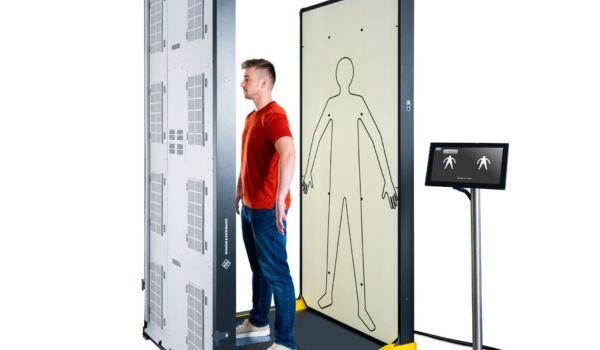
Airports Of Thailand Selects Rohde And Schwarz Screening Scanners
Five Thai airports are adopting millisecond security screening technology to speed up checkpoint lines and protect privacy.
- By Jesse Jacobs
- Aug 12, 2026
Thai aviation authorities are deploying advanced screening technology across key travel hubs to streamline passenger processing and elevate security standards.
Airports of Thailand awarded a contract to Rohde & Schwarz to install QPS201 millimeter wave security scanners across five facilities under its management. Among the locations receiving the hardware is Bangkok Suvarnabhumi Airport, a single-terminal hub serving 60 million international and domestic travelers annually.
The screening systems rely on artificial intelligence algorithms and radio-frequency millimeter wave imaging to detect prohibited hidden items while reducing false alarm rates. Unlike traditional body scanners that require travelers to raise their arms, the system uses an open design that permits a hands-down pose.
Scans complete in milliseconds. For privacy protection, potential threats highlight on a standardized digital avatar rather than displaying anatomical details.
The QPS201 hardware holds qualifications from the U.S. Transportation Security Administration and the European Civil Aviation Conference. More than 2,000 units operate in airports worldwide.