Biggest Security Incidents of 2017

Biggest Security Incidents of 2017

As we look back on these security events, think of how we can move forward to predict and prevent incidents like this in the future.

Like most industries, security saw some common trends throughout 2017. Many of the tragic incidents this year fell into one of three categories. As we look back on these security events, think of how we can move forward to predict and prevent incidents like this in the future.

Mass Shootings

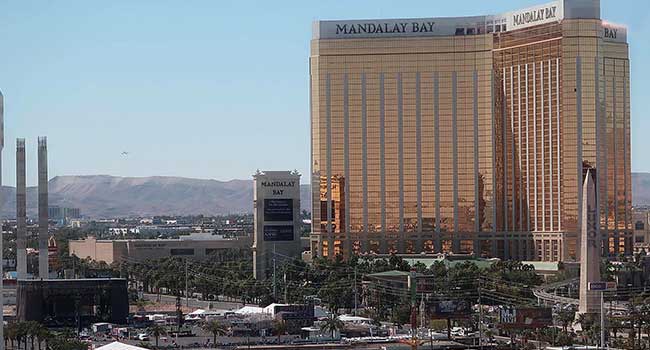
Two of the 10 deadliest mass shootings in modern U.S. history occurred in 2017. On Oct. 1, a gunman opened fire from the Mandalay Bay hotel down onto the crowd at an outdoor music festival on the Las Vegas Strip. The gunman killed 58 people and himself, and wounded more than 500 others. The Mandalay Bay attack is the deadliest mass shooting committed by an individual in the United States.

A month later, on Nov. 5, a gunman opened fire onto the congregation during a service at the First Baptist Church in Sutherland Springs, Texas. Of the small congregation, 26 people were killed and 20 others were injured. It was later found that the gunman should not have been able to legally acquire a firearm due to a domestic violence conviction during his time in the United States Air Force. The incident raised concerns about similar attacks on “soft targets” such as houses of worship.

Vehicle Attacks

The trend of vehicular attacks from 2016 continued in 2017, with multiple instances worldwide. At least 13 people were killed and about 100 were injured on August 17 when a van plowed through a crowd of people in Barcelona, Spain. Responsibility for the attack was claimed by ISIS.

Eight people were killed and almost a dozen injured in New York when a man in a rented pickup truck drove down a busy bicycle path. Authorities found a note near the truck claiming that the attack was made in the name of ISIS.

In response to these and other attacks, many public spaces and events added heavy barriers and roadblocks to their security measures. The purpose of the barriers is to prevent vehicles from being able to drive into pedestrian areas to cause harm.

Bombing Attacks

Bombing attacks were committed by terrorists around the world in 2017. On May 22, a suicide bomber detonated an improvised explosive device packed with nuts and bolts to act as shrapnel in the foyer area of the Manchester Arena in Manchester, United Kingdom. The attack occurred after a concert that was attended by 14,200 people, and 22 people were killed. It was the deadliest attack in the United Kingdom since the July 7, 2005 London bombings.

On Dec. 11, a man wearing a homemade pipe bomb set off his explosive in a busy subway walkway below the Port Authority Bus Terminal in New York City. The device that detonated was a foot-long pipe containing black powder, a battery, wiring, nails and screws, and was attached to the suspect with Velcro and zip ties. Authorities said the suspect pledged allegiance to ISIS and had at least two devices. No one was killed in the attempted suicide bombing, but three people sustained minor injuries.

As a result of the attempted transportation-related bombing, Senate Minority Leader Chuck Schumer has urged the TSA to expedite rollout of their new suicide-vest-detecting tech. The explosive screening system detects potential threats by identifying any metallic or non-metallic objects that block the naturally occurring emissions from a person’s body and triggers an alarm if a person carrying or wearing a person-borne improvised explosive device passes by it. 

About the Author

Jessica Davis is the Associate Content Editor for 1105 Media.

Featured

  • TSA Introduces New $45 Fee Option for Travelers Without REAL ID Starting February 1

    The Transportation Security Administration (TSA) announced today that it will refer all passengers who do not present an acceptable form of ID and still want to fly an option to pay a $45 fee to use a modernized alternative identity verification system, TSA Confirm.ID, to establish identity at security checkpoints beginning on February 1, 2026. Read Now

  • The Evolution of IP Camera Intelligence

    As the 30th anniversary of the IP camera approaches in 2026, it is worth reflecting on how far we have come. The first network camera, launched in 1996, delivered one frame every 17 seconds—not impressive by today’s standards, but groundbreaking at the time. It did something that no analog system could: transmit video over a standard IP network. Read Now

  • From Surveillance to Intelligence

    Years ago, it would have been significantly more expensive to run an analytic like that — requiring a custom-built solution with burdensome infrastructure demands — but modern edge devices have made it accessible to everyone. It also saves time, which is a critical factor if a missing child is involved. Video compression technology has played a critical role as well. Over the years, significant advancements have been made in video coding standards — including H.263, MPEG formats, and H.264—alongside compression optimization technologies developed by IP video manufacturers to improve efficiency without sacrificing quality. The open-source AV1 codec developed by the Alliance for Open Media—a consortium including Google, Netflix, Microsoft, Amazon and others — is already the preferred decoder for cloud-based applications, and is quickly becoming the standard for video compression of all types. Read Now

  • Cost: Reactive vs. Proactive Security

    Security breaches often happen despite the availability of tools to prevent them. To combat this problem, the industry is shifting from reactive correction to proactive protection. This article will examine why so many security leaders have realized they must “lead before the breach” – not after. Read Now

  • Achieving Clear Audio

    In today’s ever-changing world of security and risk management, effective communication via an intercom and door entry communication system is a critical communication tool to keep a facility’s staff, visitors and vendors safe. Read Now

New Products

  • Automatic Systems V07

    Automatic Systems V07

    Automatic Systems, an industry-leading manufacturer of pedestrian and vehicle secure entrance control access systems, is pleased to announce the release of its groundbreaking V07 software. The V07 software update is designed specifically to address cybersecurity concerns and will ensure the integrity and confidentiality of Automatic Systems applications. With the new V07 software, updates will be delivered by means of an encrypted file.

  • A8V MIND

    A8V MIND

    Hexagon’s Geosystems presents a portable version of its Accur8vision detection system. A rugged all-in-one solution, the A8V MIND (Mobile Intrusion Detection) is designed to provide flexible protection of critical outdoor infrastructure and objects. Hexagon’s Accur8vision is a volumetric detection system that employs LiDAR technology to safeguard entire areas. Whenever it detects movement in a specified zone, it automatically differentiates a threat from a nonthreat, and immediately notifies security staff if necessary. Person detection is carried out within a radius of 80 meters from this device. Connected remotely via a portable computer device, it enables remote surveillance and does not depend on security staff patrolling the area.

  • Unified VMS

    AxxonSoft introduces version 2.0 of the Axxon One VMS. The new release features integrations with various physical security systems, making Axxon One a unified VMS. Other enhancements include new AI video analytics and intelligent search functions, hardened cybersecurity, usability and performance improvements, and expanded cloud capabilities