California Enacts Sweeping Safeguards Regulating AI Across Multiple Sectors
State measures mandate human oversight in employment and healthcare while targeting digital deepfakes and biosecurity risks.
- By Jesse Jacobs
- Oct 02, 2026
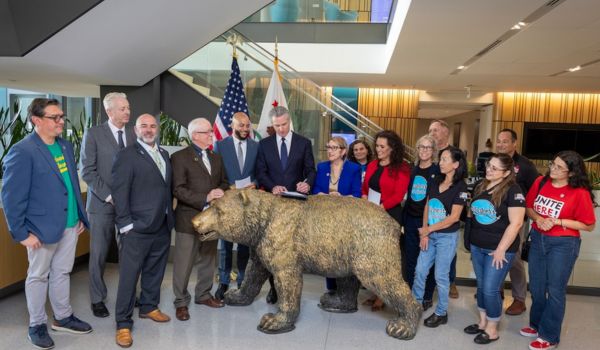
California has expanded its framework regulating artificial intelligence by enacting a suite of state laws that impose strict controls on how automated systems are deployed in workplaces, healthcare facilities and public spaces.
The legislative package signed by Gov. Gavin Newsom introduces first-in-the-nation workplace requirements governing automated decision-making. Under the new measures, employers are prohibited from relying solely on artificial intelligence algorithms when executing disciplinary actions or employee terminations. The legislation also mandates that companies notify workers if AI integration directly results in mass layoffs, relocations or terminations and prohibits the installation of electronic workplace surveillance tools inside restroom facilities.
Additional workplace provisions target specific sectors, including higher education institutions and legal practices. Public colleges and universities must establish mandatory training programs regarding AI procurement and use. Within the legal field, attorneys are restricted from completely delegating core duties, such as brief drafting and legal evaluation, to automated tools.
In the healthcare sector, the state established boundaries ensuring licensed medical providers retain final clinical authority over patient care decisions when using AI diagnostic software. Developers of clinical decision support tools are now required to take proactive measures to identify and mitigate algorithmic biases within their software.
To combat digital fraud, the new laws strengthen consumer transparency and likeness rights. Modifying or removing digital watermarks used to identify AI-generated media is now illegal under state law. The legislation updates civil and criminal penalties targeting unauthorized digital replicas, prohibiting the creation of non-consensual sexually explicit deepfakes and impersonation attempts. At the municipal level, public comments submitted during local government proceedings must originate from verified individuals rather than automated software systems.
The legislative package also addresses biosecurity risks linked to synthetic biology. Companies manufacturing and distributing gene synthesis materials must follow safety screening protocols, verify customer identities and monitor order histories to prevent the unauthorized production of dangerous biological agents.