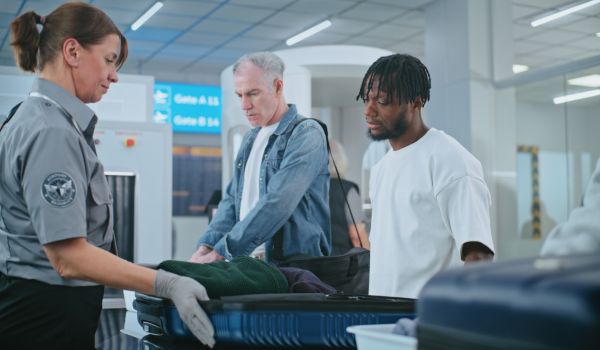
Shutdown Strains Traveler Confidence as Airport Delays Surge
Concerns mount over flight disruptions and baggage security as federal funding lapses impact TSA operations and national airspace efficiency.
- By Jesse Jacobs
- Feb 23, 2026
Travelers are reporting a decreased sense of security at U.S. airports as the partial Department of Homeland Security shutdown impacts Transportation Security Administration (TSA) operations. According to a new Global Rescue survey of frequent travelers, more than one-third of respondents feel less safe moving through domestic airports due to the shutdown.
While 49% reported no change in their safety perceptions, 25% said they feel "somewhat less safe" and 10% reported feeling "much less safe." These perceptions are being mirrored by significant operational data. During the current lapse, flight delays have increased by more than 500% at major hubs like Boston and Washington, D.C., as the aviation system loses an estimated 1 million workhours to inefficiencies.
Operational Anxiety and Infrastructure Strain
The ripple effects of the funding lapse are driving widespread anxiety. With TSA staffing facing shortages, 63% of travelers expressed increased concern regarding lost, delayed, or mishandled luggage.
“Operational instability at airports quickly translates into traveler anxiety,” said Dan Richards, CEO of The Global Rescue Companies and a member of the U.S. Travel and Tourism Advisory Board. “When travelers perceive that security staffing, baggage screening and passenger throughput are under strain, confidence erodes.”
The survey and recent aviation data highlight a system under duress:
- 67% of respondents are more worried about missing flights or experiencing delays
- 4,100+ flights were canceled in a single 10-day period due to federal staffing issues
- $285M–$580M in daily economic impact is estimated as flight reductions phase in
Financial and Security Risks
Beyond delays, the shutdown has created a secondary crisis in consumer protection. Richards noted that standard travel insurance policies typically do not list government shutdowns as a valid reason for cancellation. Coverage generally only applies if disruptions qualify as a "common carrier" issue, such as a mechanical failure or weather.
To mitigate these risks, Richards recommends that travelers seeking guaranteed flexibility consider "cancel for any reason" (CFAR) upgrades. These are often the only way to ensure financial recovery for trips canceled due to shutdown-related instability.
"Restoring predictability and operational reliability is critical to maintaining trust in the U.S. air travel system," Richards said. "Without full funding, the system remains in a state of reactive recovery rather than proactive security."